
 All Field Notes
Field Notes · On embodiment & change
The Space Between Stability and Desire: A Reflection on Career, Responsibility, and the Quiet Pull Toward Something More
A reflection on the quiet pull toward something more, the responsibilities that keep us grounded, and how somatic and psychedelic work can help us navigate the tension with clarity and care.
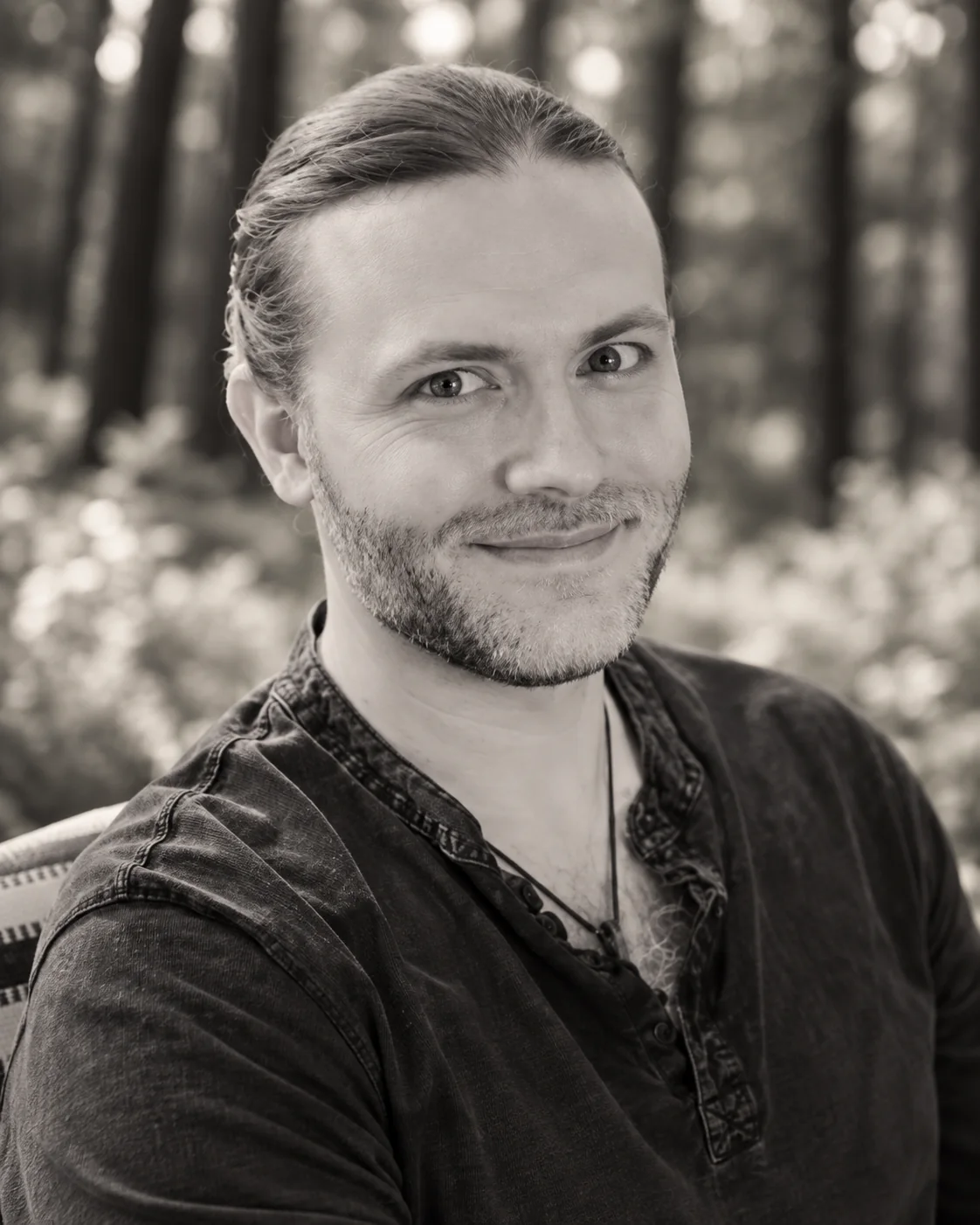 By Forest Hart
November 19, 2025
A contemplation on longing, livelihood, and the somatic and psychedelic tools that help us listen for what wants to emerge—without burning the life we’ve built.
There comes a moment—sometimes subtle, sometimes insistent—when the life we’re living starts to feel slightly misaligned with the life that wants to come next. Not a crisis, not a collapse. More like a soft ringing in the background. A sense that something in us is stretching toward a future we don’t yet have language for.
And yet, most of us can’t just drop everything and run toward that distant shimmer. We have responsibilities. Rent. Kids. Mortgages. Health insurance. Lives we’ve worked hard to build and are committed to sustaining. The longing doesn’t erase that reality. It just lives beside it, asking for attention we’re not always sure how to give.
This tension—between stability and desire, between the known structure and the quietly growing “more”—can be felt in the body as well as in our thoughts. A negotiation between safety and possibility.
I’ve sat with many people in this in-between. I’ve lived in it myself.
Not the dramatic version of change, but the slow, thoughtful kind that asks:
How do I expand without imploding the life that supports me?
How do I honor the longing without abandoning the ground beneath my feet?
There is no single answer, because the answer isn’t conceptual. It’s embodied.
The Body’s Side of the Conversation
When we’re pulled between what sustains us and what calls us forward, the body often notices first. Not in a way that demands interpretation—just in shifts of rhythm, breath, pacing, appetite for novelty, or a subtle ache for something unnamed.
Not signs. Not symbols.
Just information.
People sometimes come into somatic sessions not because something is “wrong,” but because something inside them is slightly out of sync with how they’re living. They don’t always know what should change. They only know something wants space.
Somatic work doesn’t force answers into existence.
It can offer a way to notice where there seems to be room to breathe—and where there doesn’t.
It gives a person the chance to meet themselves without the noise of urgency or expectation. Sometimes that clarity settles the longing. Sometimes it sharpens it. Either way, the nervous system gets a voice in the decision.
That felt experience is one source of information, alongside our circumstances, values, and the people we trust.
When Psilocybin Enters the Picture
Psilocybin doesn’t hand out new careers, new identities, or new callings. Some people describe a change in perspective; others find the experience confusing, difficult, or less meaningful than they hoped. Preparation and integration create room to consider what happened without treating it as an instruction.
When a different perspective does emerge, it can become something to reflect on rather than act on immediately.
An experience does not establish that someone should leave a job or reinvent a life. Questions to explore afterward might include:
- where they’ve been carrying roles that no longer fit
- where they’ve outgrown certain expectations
- where there’s still life left in the work they do
- where they’ve been living more for the container than for the contents
No judgment.
No directive.
Just possibilities to examine.
From there, people often find a quieter kind of balance: the ability to stay in the career they have while slowly shifting how they inhabit it. Moving from a posture of survival to one of alignment—sometimes incrementally, sometimes with small structural changes, sometimes with nothing more dramatic than permission to want more.
Psychedelic experiences can be disruptive, and outcomes vary. The work afterward is to make room for reflection, seek appropriate support, and let consequential decisions unfold with care.
Living in the In-Between
Career transition often gets framed as an all-or-nothing event. Quit your job. Burn the ships. Rewrite your résumé. Reinvent everything.
But most real transitions happen while people are still working, still parenting, still maintaining their current lives. The transformation is internal long before it’s external. It starts with noticing where something feels tight, or rote, or slightly too small.
It starts with curiosity, not disruption.
Neither a body sensation nor a psychedelic experience can tell someone which choice is right. In reflection, we can explore fear, desire, and uncertainty without assuming that a strong feeling is proof.
There may be room between “I can’t leave” and “I must leave” to consider other possibilities: adjusting boundaries, renegotiating goals, expanding outside of work, building a side practice, or reconnecting to what once brought meaning.
Transitions, when done well, rarely look like escape.
They look like maturation. Like alignment. Like breathing in a little deeper.
A Closing Thought for Anyone Standing in This Space
There’s nothing wrong with wanting more.
There’s nothing wrong with needing stability.
And there’s nothing wrong with holding both at once.
The work isn’t to choose between them.
The work is learning how to listen—to the body, to the longing, to the parts of us that know timing, pacing, and truth.
Somatic reflection may be one way to listen. For some people, a psychedelic experience becomes part of that reflection. Neither guarantees clarity, and neither is required to begin.
Life, in the meantime, asks us to keep living while we sort it out.
You don’t have to leap.
You don’t have to abandon anything.
You don’t have to decide quickly.
You just have to start paying attention to where there’s room to grow—and follow that space at the pace your life can hold.
